
The Visual Language of the Concrete Jungle
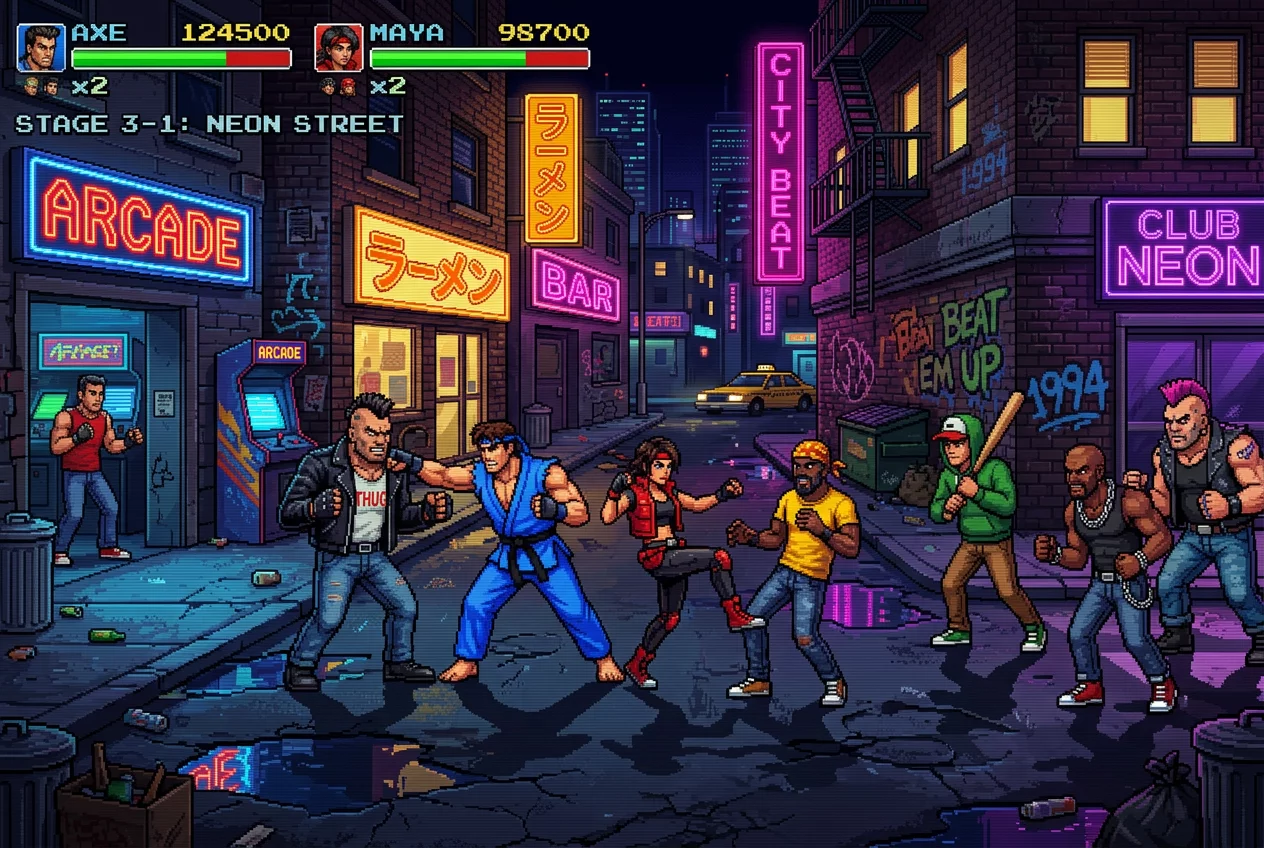
The urban aesthetic of this title defined a generation. It wasn't just about the combat; it was about the environment. Artists utilized the limited palette of the Sega hardware to create rain-slicked streets, pulsating neon signs, and detailed backdrops that felt alive. This visual crown of the genre allowed players to immerse themselves in a world that felt both dangerous and alluring. Even today, the way these pixels represent light and shadow on a leather jacket or a spinning trash can remains a masterclass in efficiency.
Technical Mastery in 16-Bit Color
Behind the punches and kicks lay a sophisticated use of layering and parallax scrolling. Each stage offered a unique atmosphere, from the rhythmic motion of elevators to the flickering lights of an online arcade. The way characters occupy the 2D space while suggesting 3D depth was revolutionary for its time. Designers had to balance character clarity against complex background textures, ensuring the action never got lost in the grit.
- Detailed character sprites with fluid frame-by-frame animation sets.
- Use of dithering to simulate transparency and complex lighting effects on CRT screens.
- Strong industrial and electronic synth-pop soundtracks that complemented the visuals.
Modern gaming often forgets the limitations that forced these creative explosions. The ability to convey a whole city's mood through a handful of repeating tiles is a lost art. Whether it was the flickering of a streetlamp or the spray of water from a broken fire hydrant, every element was placed with purpose. Today, enthusiasts can find these aesthetics echoed in various online portals dedicated to retro preservation, proving the timelessness of this specific urban art style.
Frequently Asked Questions
What makes 16-bit beat-em-ups visually unique?
They utilized high-contrast color palettes and hand-drawn sprites that captured a gritty, cinematic feel reminiscent of 80s action movies, which is difficult to replicate with 3D graphics.
Why was Sega the preferred platform for brawlers?
The processor speed of the Sega hardware allowed for faster sprite movement and more characters on screen simultaneously, providing a more frantic and intense visual experience.
BeatEmUpFan
15/05/2026