
The Genesis of Steel Mazes
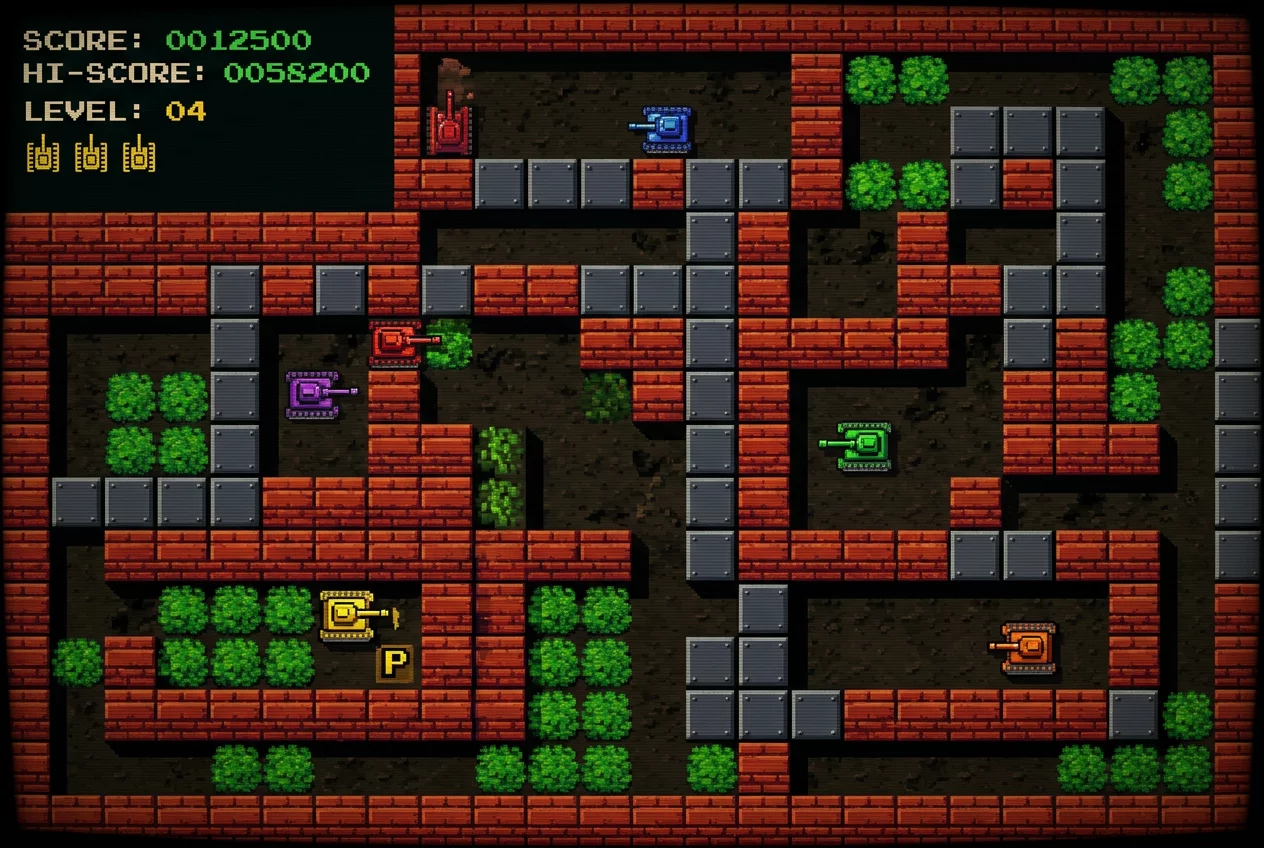
Long before high-fidelity simulators occupied our hard drives, a simple grid-based conflict captured the imagination of millions. The crown of the 8-bit era was undoubtedly the strategic maneuvering of pixelated tanks through brittle brick walls and impenetrable steel blocks. This masterpiece of minimalist design proved that limited hardware could foster immense engagement without needing complex narratives or voice acting. The origins of this title trace back to the arcade boom of the early eighties, eventually finding its permanent home in the living rooms of Dendy owners across the globe.

Aesthetic Mastery and Symbolic Sound
Visually, the game utilized a high-contrast palette that made every element instantly recognizable. Green forest tiles, blue water bodies, and the dreaded white frozen slabs weren't just decorative; they were functional instructions to the player. The audio design complemented this perfectly, with a mechanical startup melody that still triggers nostalgia in anyone who heard it through a CRT television. In an era where online competition didn't exist, the cooperative mode offered a local experience that many modern networked games struggle to replicate.
- The unique destructive nature of brick tiles compared to solid steel blocks.
- Strategic importance of protecting the eagle base insignia at all costs.
- Evolutionary power-ups that altered turret shells and hull armor.
The legacy of this franchise persists through countless clones and modern homages, proving the formula was virtually perfect from the start. It remains a testament to the power of pure logic and timing, where even a single misplaced shot could lead to a sudden and dramatic defeat. Its cultural significance sits firmly alongside other 8-bit icons, representing a time when gaming was about clarity, precision, and the simple joy of overcoming a digital maze.
ArcadeKing
15/05/2026