
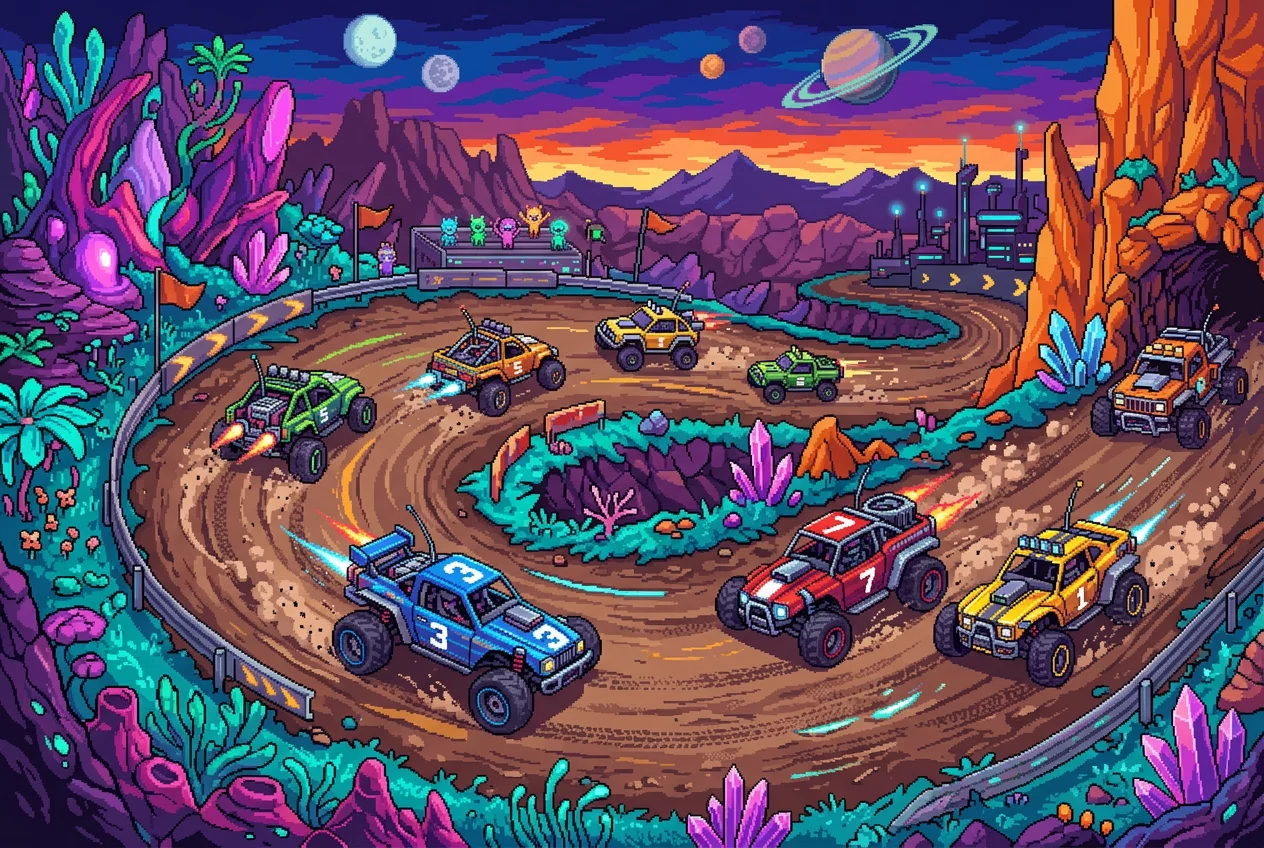
The Visual Evolution of Isometric Racing
This title represents a significant technical milestone for the Sega Mega Drive, pushing the boundaries of what was possible with 16-bit hardware. By utilizing an isometric perspective, the developers created a sense of depth and scale that traditional top-down racers simply couldn't achieve. The alien landscapes are rendered with a palette of deep purples and vibrant oranges, making every track feel like a window into a different galaxy. This aesthetic choice wasn't just about looking good; it allowed for more complex track designs with verticality and branching paths that remained smooth even during the most intense moments. The way shadows fall across the futuristic dirt tracks shows an attention to detail that remains impressive decades later, crowning this game as a visual masterpiece of its era.
Symphonic Speed: The Audio Legacy
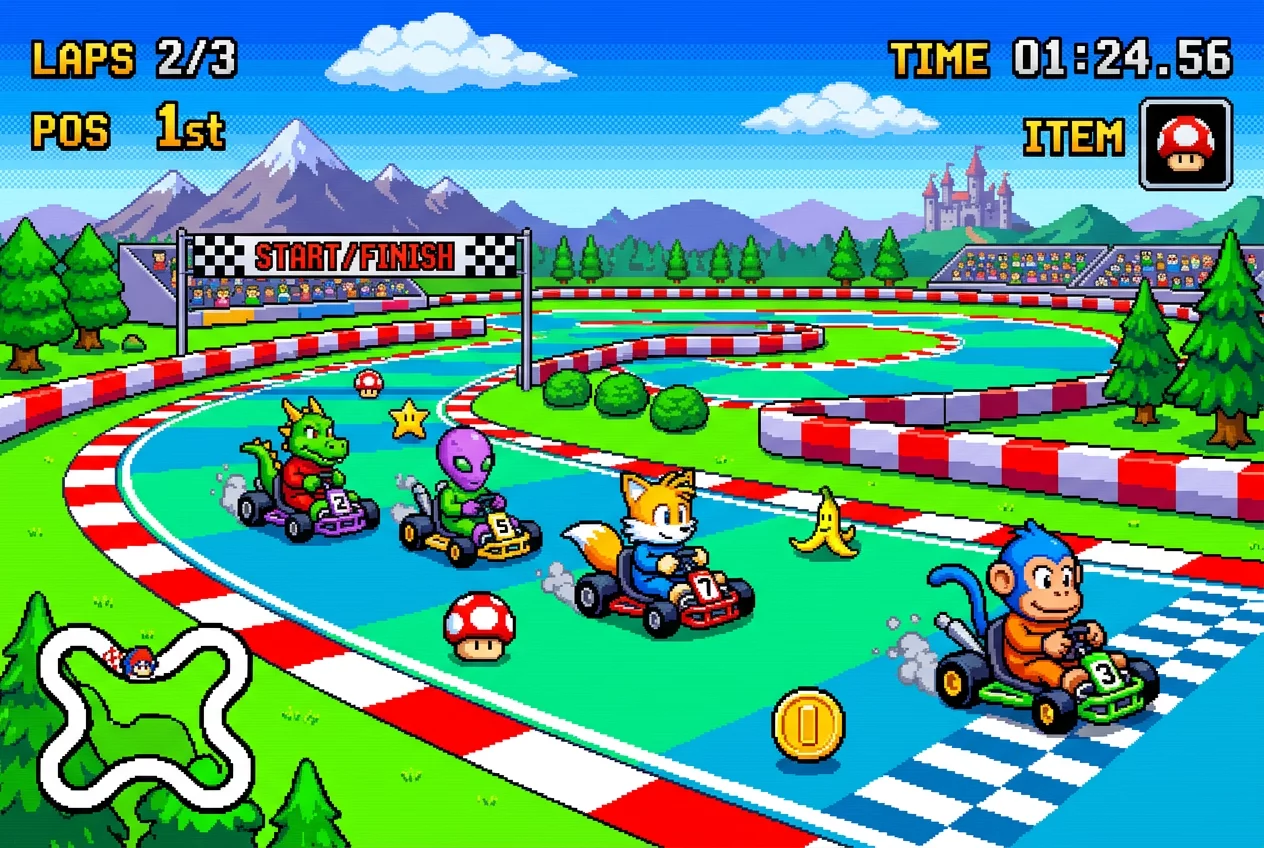
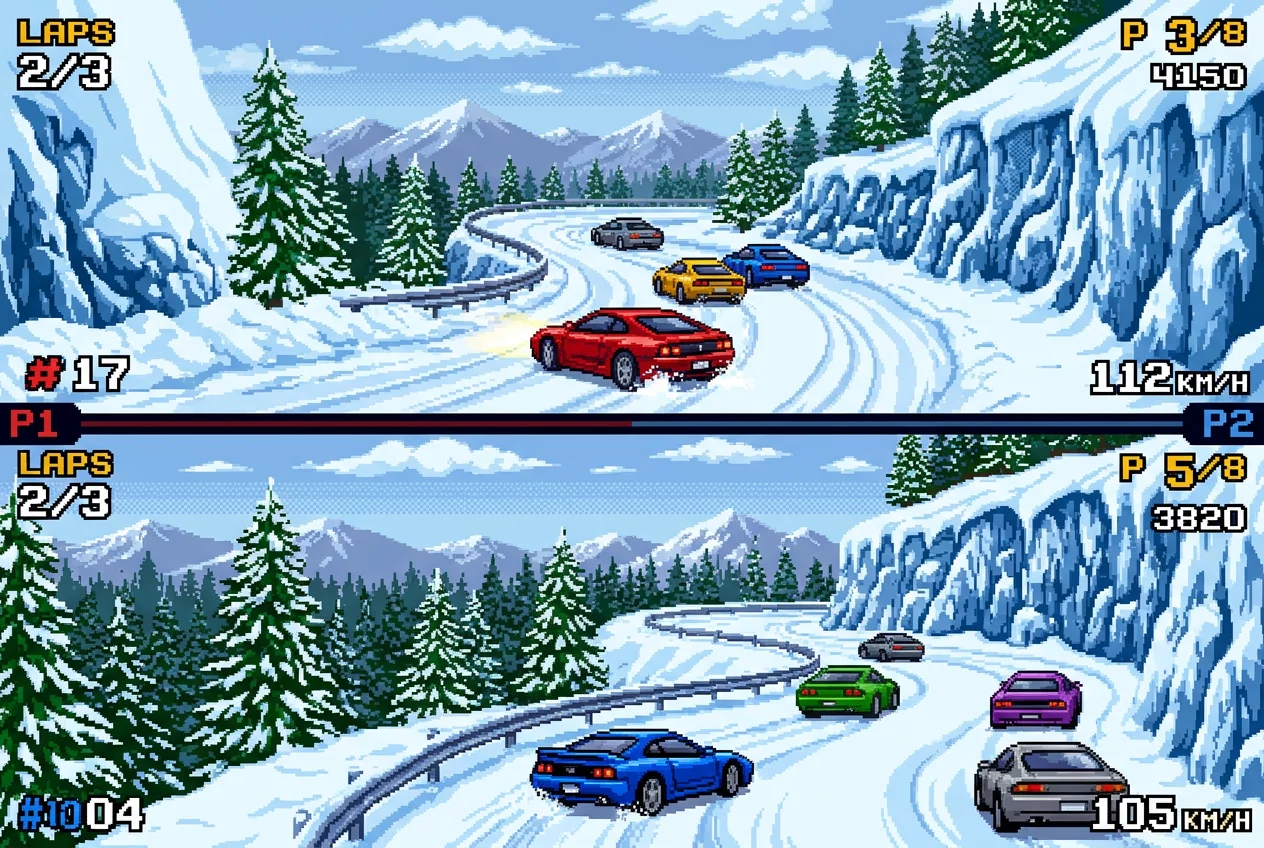
Beyond the visuals, the audio design is where this title truly shines. The inclusion of licensed-style rock and electronic tracks was a bold move that paid off, creating an atmosphere that felt more like a futuristic festival than a simple competition. The sound chip was pushed to its limits to reproduce the heavy bass and crisp percussion needed to match the high-speed action. It wasn't just background noise; the music was integrated into the experience, with rhythm-based visual cues and sound effects that synchronized with the tempo. This level of audio-visual synergy was rare for the time and helped establish a new standard for online communities of enthusiasts who still remix these classic tracks today.
- Revolutionary isometric rendering techniques for 16-bit systems.
- High-fidelity audio tracks that utilized the full potential of the sound chip.
- Distinctive sci-fi art direction featuring alien biomes and futuristic vehicles.
Looking back, the cultural impact of this mayhem is undeniable. It proved that racing games didn't need to follow the "behind-the-car" perspective to be immersive. The combination of stellar production values and a unique artistic vision ensured its place in history. While many titles from the 90s have faded into obscurity, this one remains a frequent subject of discussion among retro gaming historians. Its influence can still be seen in modern indie titles that strive to capture that same blend of style and speed. For anyone interested in the technical peak of the 16-bit era, this is a essential case study in how to maximize limited hardware for maximum impact.
RockRacer
27/05/2026