
The Technological Crown of Arcade Portability
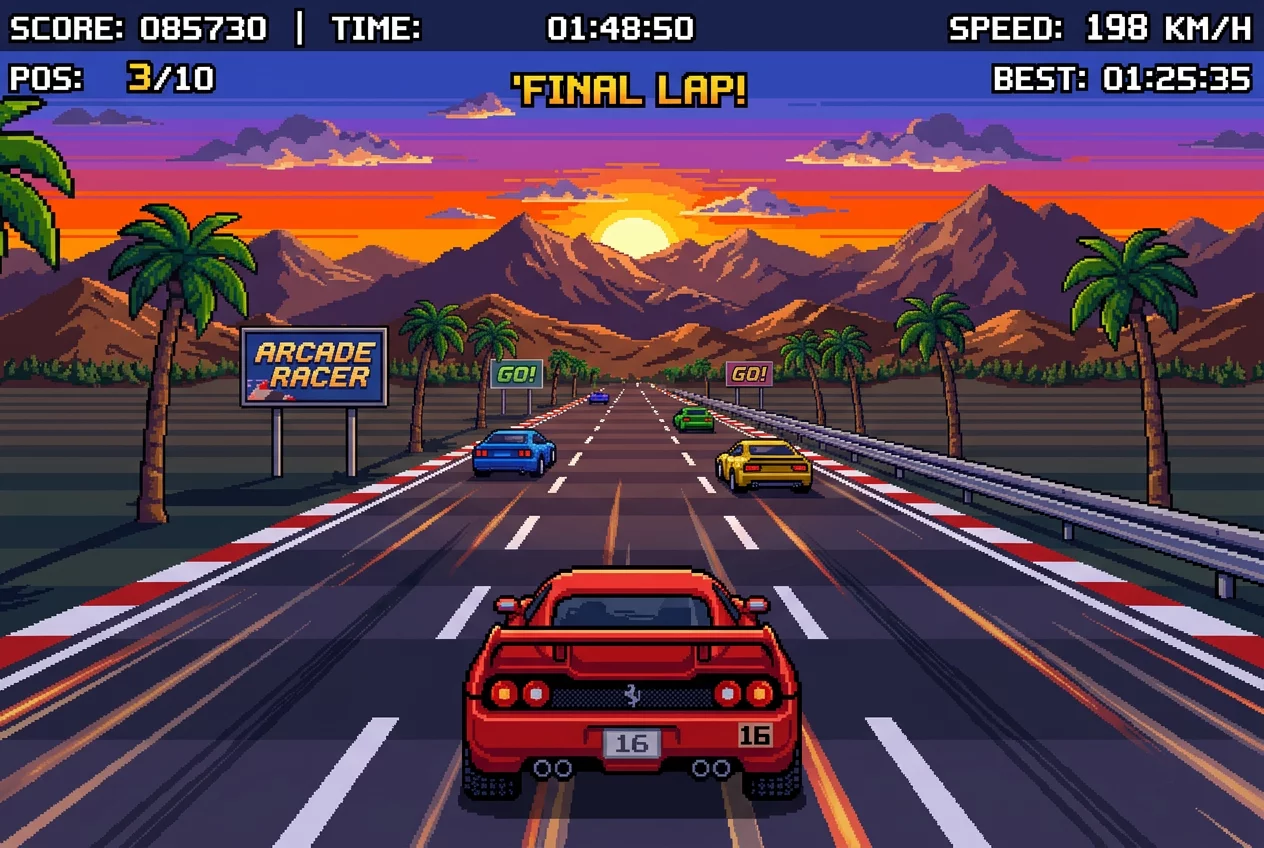
During the early 1990s, the racing genre underwent a crown shift in visual fidelity. Developers were tasked with translating the high-octane energy of arcade cabinets into the limited memory of home cartridges. The 16-bit era, specifically on Sega hardware, pushed the boundaries of sprite scaling and pseudo-3D environments. It wasn't just about finishing first; it was about the sensation of wind rushing past the pixels. Today, the legacy of these games survives in the hearts of collectors and enthusiasts who value raw technical ingenuity over modern photorealism.


Expanding the Horizon of Visual Design
While modern simulators focus on physics, these retro classics focused on style and flow. The use of vibrant color palettes and parallax scrolling created an illusion of depth that was revolutionary for its time. Designers utilized every trick in the book, including raster effects to simulate hills and curves. It is fascinating to see how the industry evolved from solo racing to the competitive online frameworks we see today. However, the core soul of the racing world remains anchored in these early experiments with speed and hardware limitations.
- Pioneering sprite-scaling techniques that simulated real-time depth.
- Synth-wave inspired soundtracks that defined the aesthetic of the 90s.
- Advanced lighting effects within the constraints of 16-bit palettes.
- Experimental weather systems that changed road handling and visuals.
The impact of High Speed Gear is still felt in modern indie racers. By stripping away the bloat of modern UI, these titles focused on the pure connection between the player and the machine. Whether you are navigating a rainy mountain pass or a neon-soaked city highway, the visual language used by these developers remains a masterclass in efficient and evocative digital art. In the vast landscape of online gaming, these vintage titles serve as a reminder that limitations often breed the most memorable creative solutions.
Era Insights FAQ
What hardware made these speeds possible?
The Sega Genesis utilized a high-clocked CPU and dedicated sound hardware to handle the heavy calculations required for fast sprite manipulation.
Why are these games still relevant?
They represent a period where art style had to overcome technical barriers, resulting in a timeless look that modern realistic games often lack.
SpeedDemon
12/05/2026