
The Visual Masterpiece of the 16-Bit Era
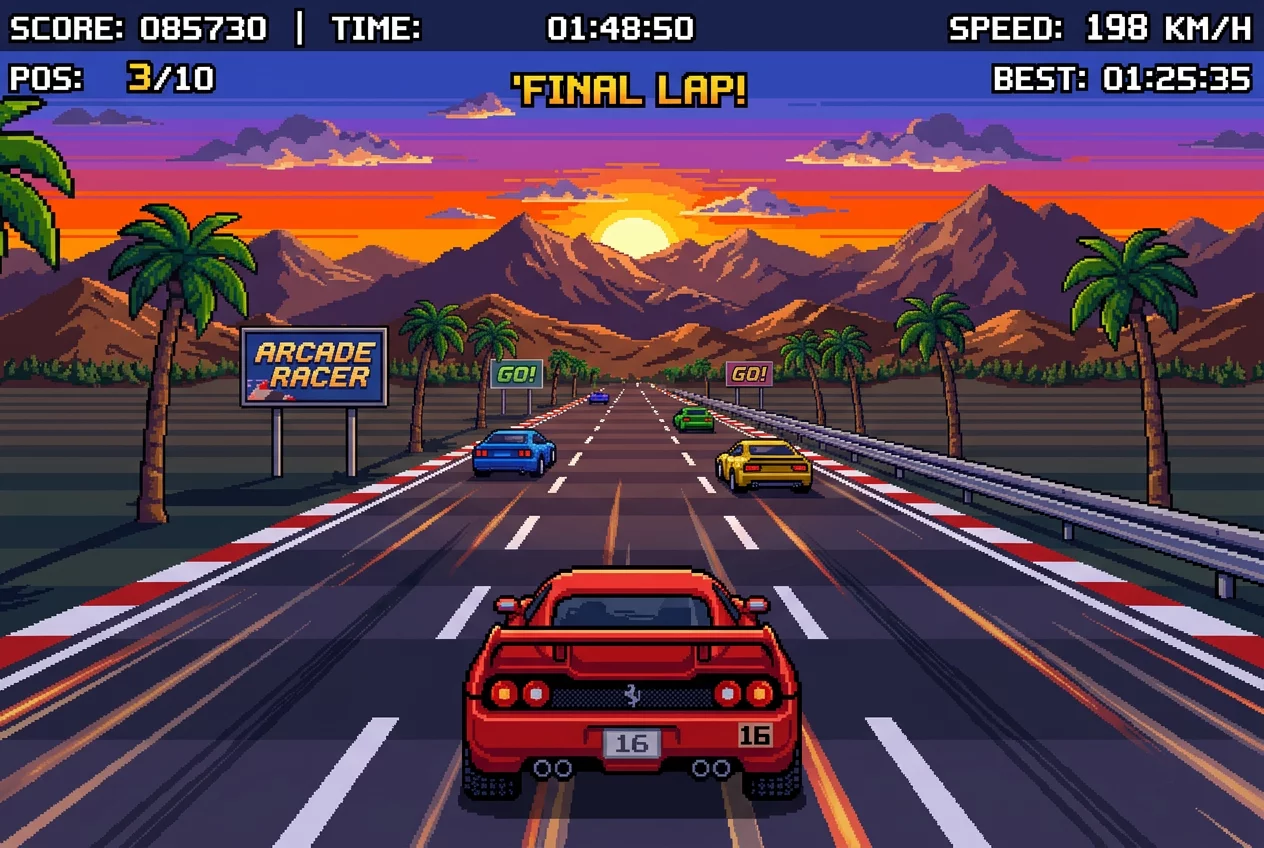
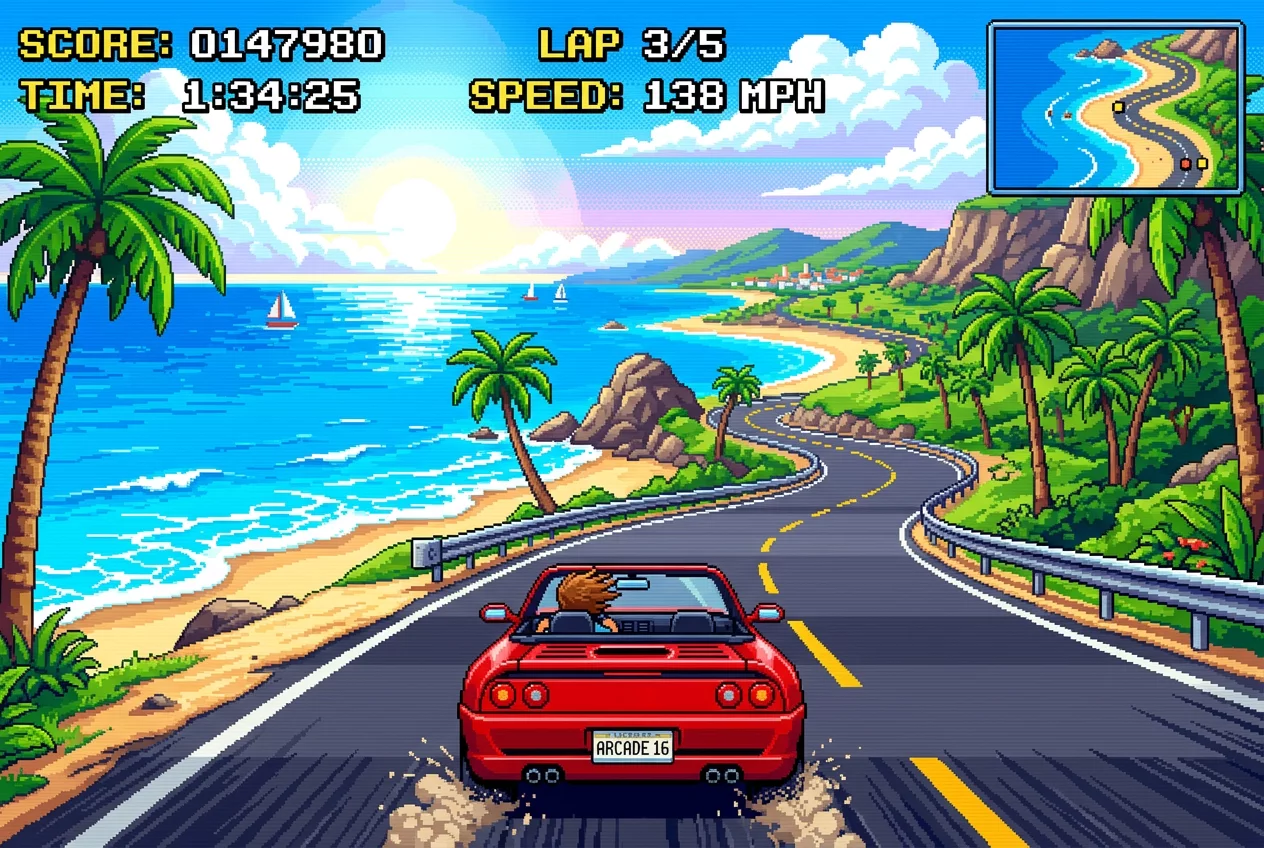
Few titles capture the essence of high-speed freedom like Coastal Driving Classic. Long before the era of realistic physics engines, this title relied on pure visual atmosphere to convey a sense of movement. The vibrant palette of blue horizons and emerald palm trees created a horizon that felt infinite, even within the hardware limitations of the time. It is a technical crown jewel that proved how much character could be injected into a digital world through clever palette swaps and sprite scaling.
The Engineering of Pseudo-3D Depth
What remains most striking today is how the developers crafted a feeling of depth. By utilizing advanced branching paths, they turned a simple straight line into an exploration of varying environments. You aren't just looking for the finish line; you are navigating a curated tour of idealized world-class vistas. It feels like an online experience of a vacation from a simpler time, where the goal was simply to see what was around the next bend.
- Revolutionary sprite-scaling technology for high-speed fluidity.
- Dynamic background transitions between coastal and mountain regions.
- Iconic synthesizer melodies that defined the summer arcade vibe.
Reflecting on this era reminds us that immersion isn't always about polygons. It is about how colors, sound, and a sense of progression work in harmony. Coastal Driving Classic remains a testament to when racing was less about the car and more about the journey itself. It holds a legendary place in our archives as a perfect example of design-led development.
Legacy Inquiries
Why were branching paths so important?
They offered players agency and rewatchable visual variety, making every excursion feel unique despite the fixed storage capacity of cartridges.
What makes its visual style distinct?
The use of bright, saturated primary colors and hyper-stylized environment details created a 'technicolor' dream landscape that modern realism often skips.
ArcadeDrifter
22/05/2026