
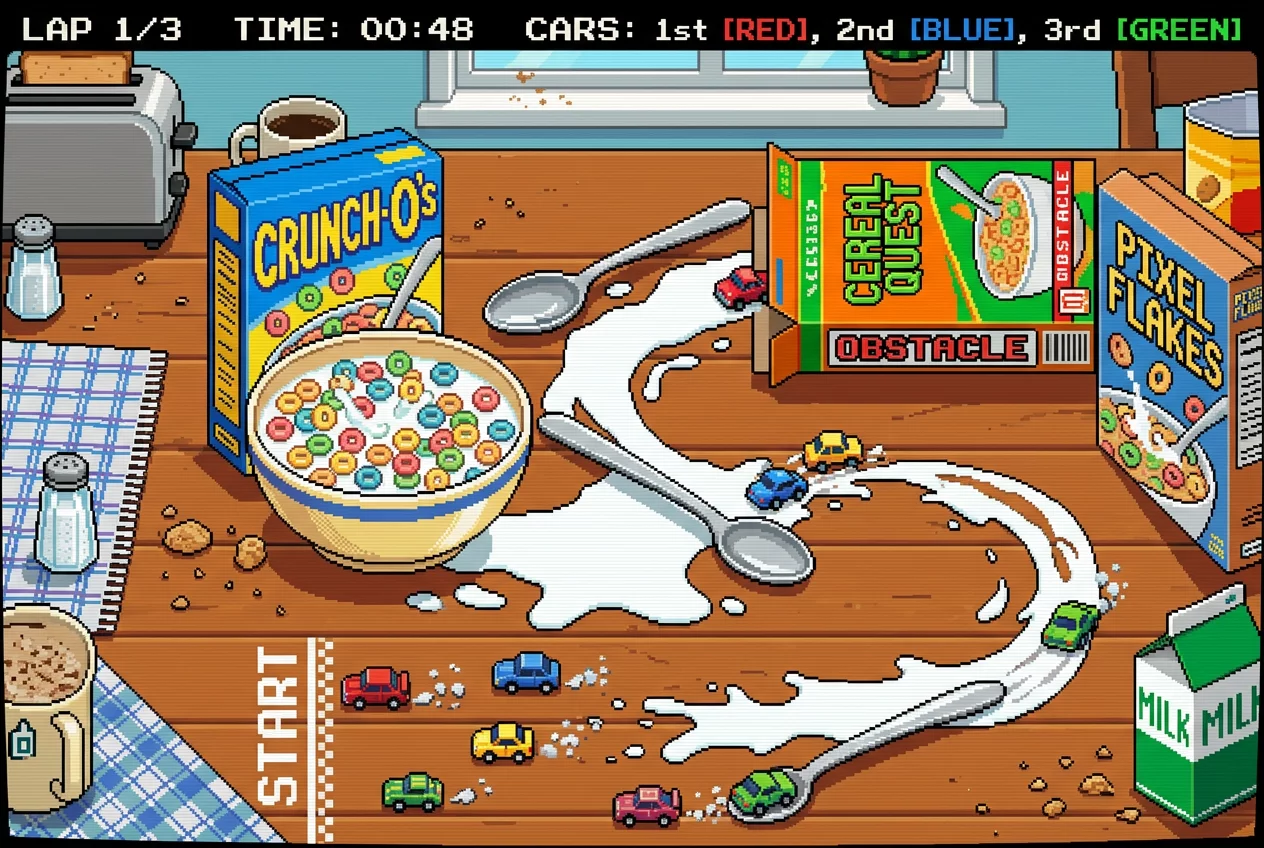
The Giant World of Tiny Machines
During the peak of the 8-bit generation, developers sought ways to push hardware limits beyond simple color swaps. One of the most creative solutions emerged in the form of micro-racers. Instead of wide-open tracks, players found themselves navigating the crown jewel of level design: a kitchen table. By shrinking the vehicles, the environment itself became the primary character, turning everyday objects into monumental hazards. The visual contrast between a tiny pixel-car and a massive bowl of cereal offered a tactile sense of scale that felt revolutionary for its time.
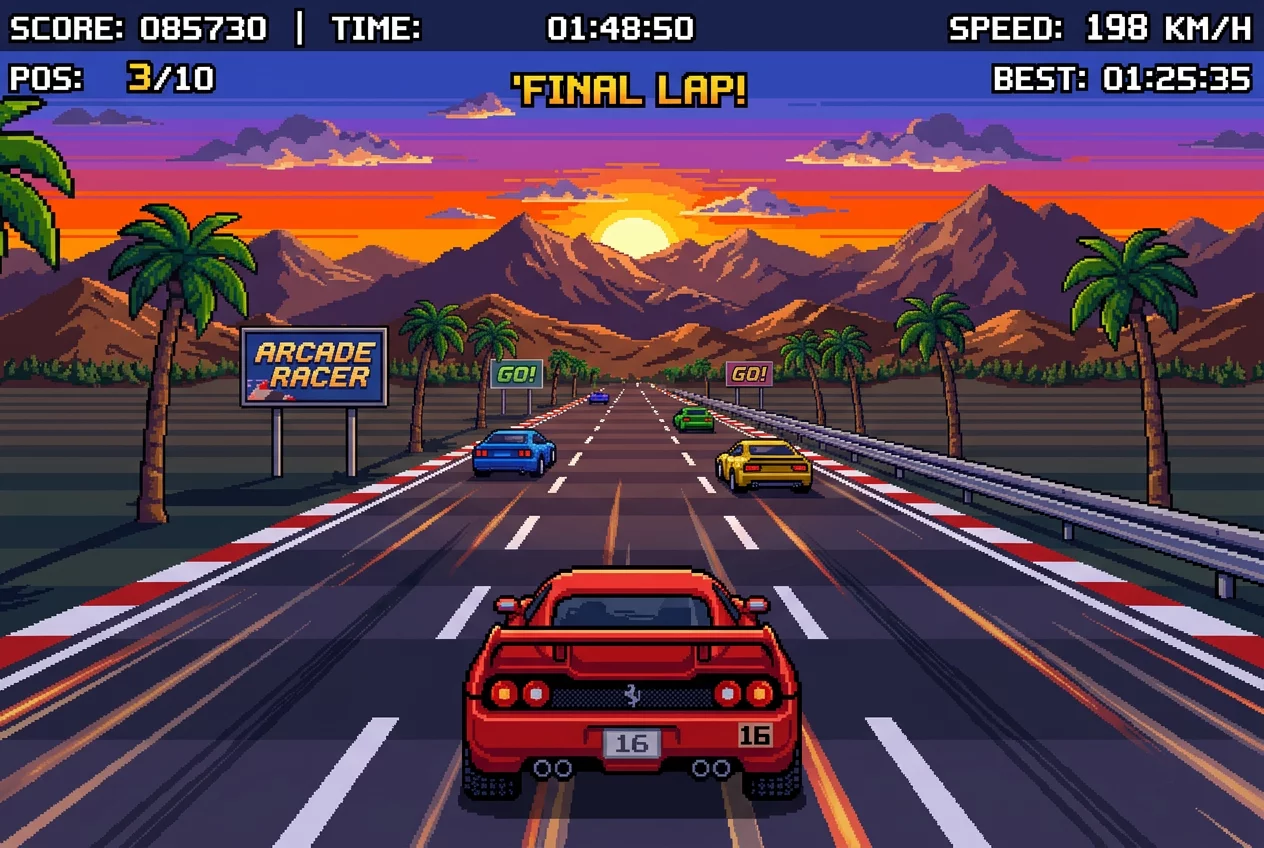
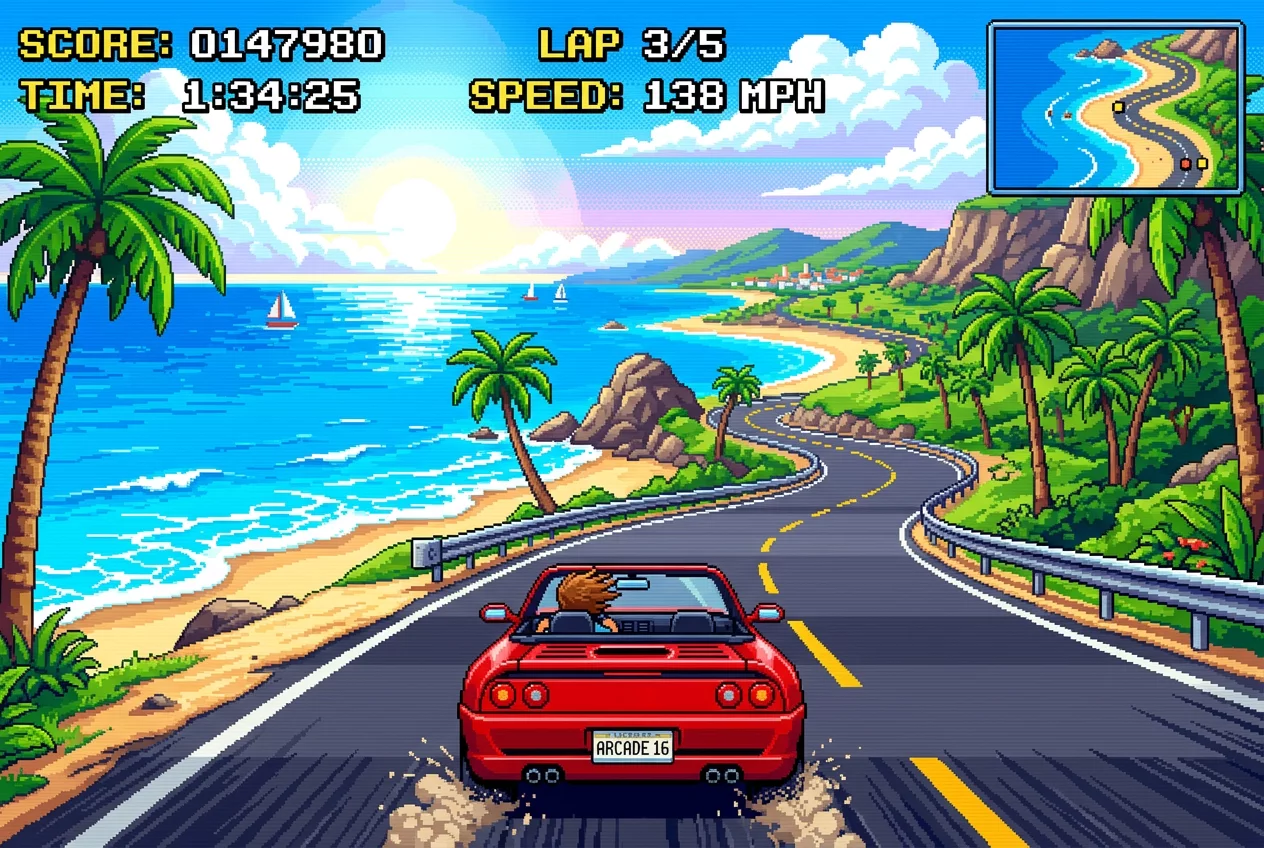
Visual Ingenuity and Sprite Management
From a technical standpoint, these titles managed to simulate intense online levels of competition by using clever sprite flickers and layered background scrolling. The tracks often featured intricate details like pencils acting as ramps or spilled liquids serving as slippery terrain. This shift in perspective allowed designers to focus on artistic detail within a concentrated space, ensuring that the visual fidelity remained high even on hardware with limited memory. The charm was not just in the speed, but in identifying the household items that formed each lap.
- Innovative top-down perspective that maximized track complexity.
- Creative sprite-based environmental animations for interactive hazards.
- High-contrast color palettes that distinguished tiny cars from complex backgrounds.
Ultimately, the legacy of miniature vehicle madness lies in its ability to make the mundane feel extraordinary. These games proved that you didn't need photorealistic textures to create an immersive world; you just needed a change in perspective. Even today, the vibrant colors and upbeat 8-bit soundtracks evoke a sense of playfulness that modern simulators often lack. It remains a testament to an era where visual limitations were met with boundless creativity.
TinyDriver
01/06/2026