
The Genesis of a 16-Bit Turning Point
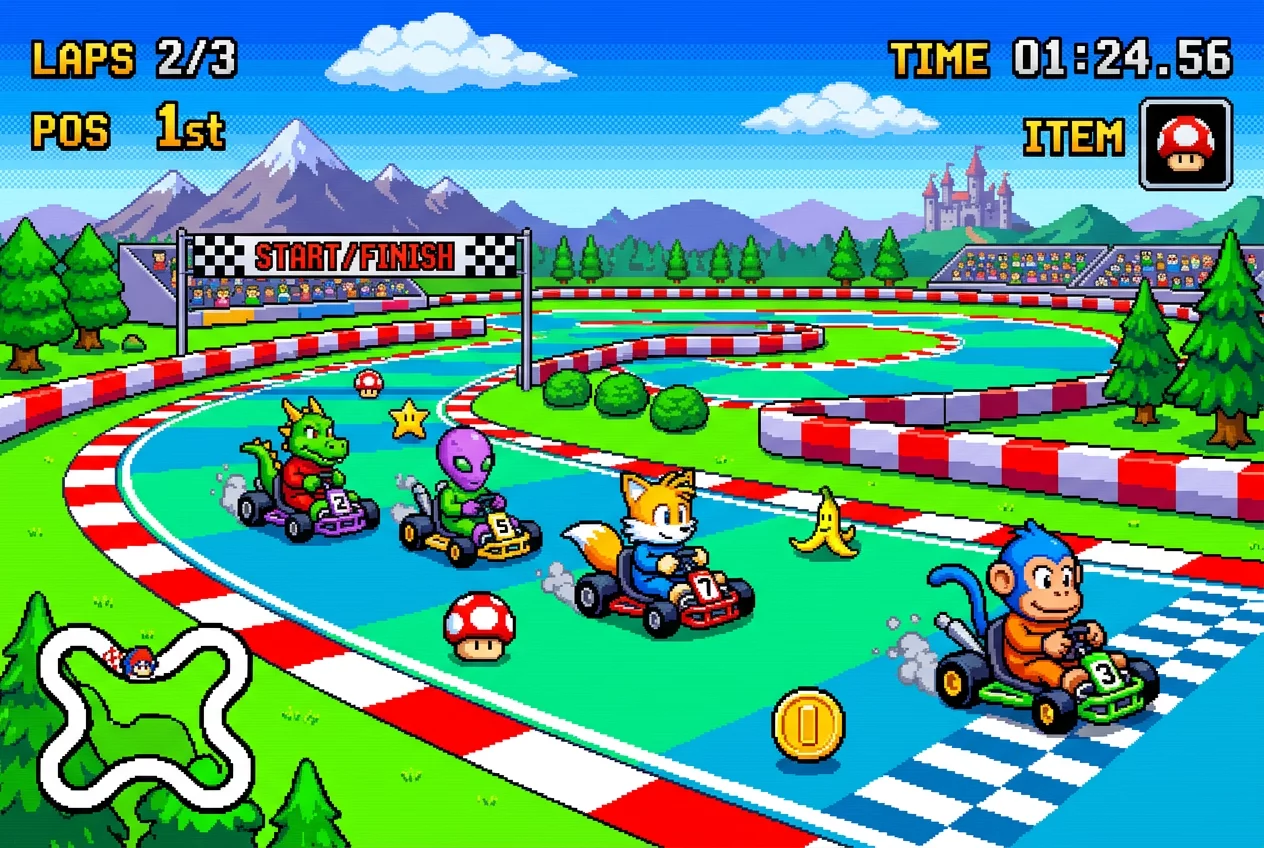
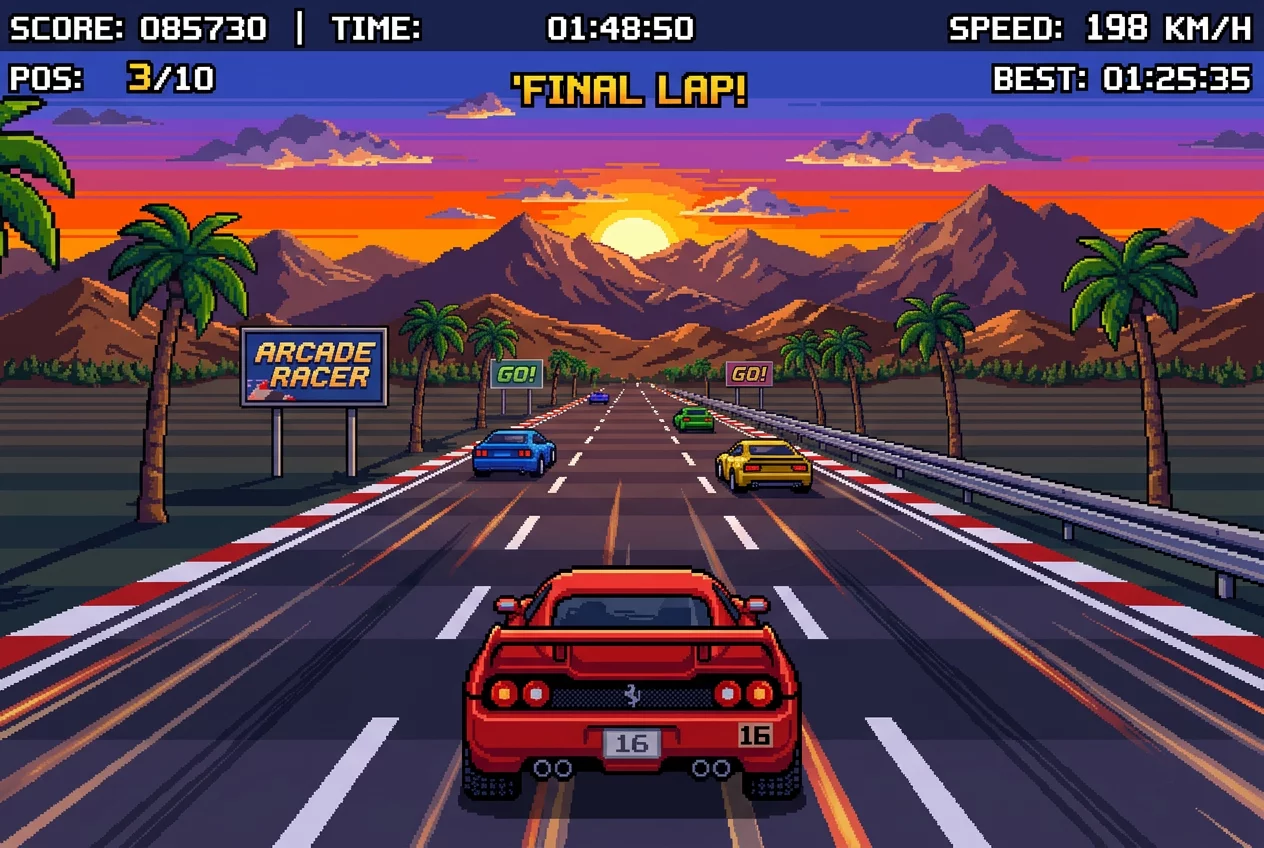
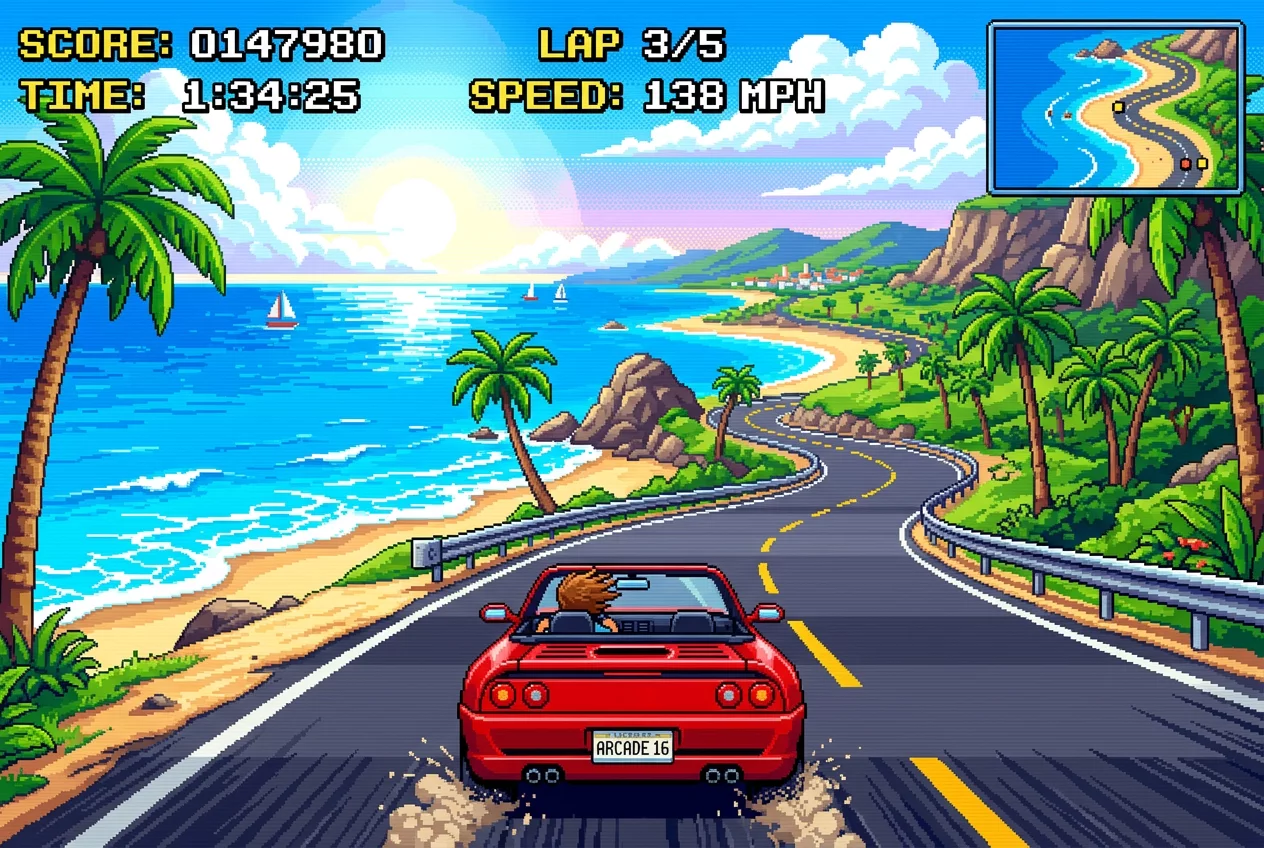
Long before the proliferation of high-fidelity 3D polygonal environments, the 16-bit era faced a significant challenge: how to represent depth in a convincing way. The Kart Racing Pioneer arrived as a bold experiment, utilizing the Sega hardware in ways previously reserved for complex flight simulators. It moved away from the static isometric perspective common in earlier racers, opting instead for a pseudo-3D ground plane that shifted dynamically as the player moved across the track. This sense of perspective provided the mechanical foundation for tight, responsive controls that felt worlds apart from its contemporary rivals. The technical crown of this achievement was the way the track seemed to stretch toward the horizon, an effect achieved through meticulous scanline manipulation and sprite scaling that kept the frame rate remarkably stable throughout the experience.
Aesthetic Brilliance Under Constraints
From an aesthetic standpoint, the developers leaned into the limitations of the Sega palette to create something truly memorable. Instead of attempting gritty photorealism, they created a vibrant, saturated world that popped off the cathode-ray tubes of the time. This design choice ensured that obstacles and power-ups were always clearly visible against the rapidly scrolling backgrounds. Online discussions among retro enthusiasts frequently highlight the intricate track designs, which forced players to master the nuances of pseudo-3D physics. The soundtrack, composed to maximize the Sega sound chip, offered high-energy synth tracks that have become iconic in their own right. Every element, from the way karts tilted during sharp turns to the animated environmental hazards, served to create a cohesive and immersive arcade experience that felt larger than the cartridges it lived on.
- Dynamic pseudo-3D ground plane rendering techniques.
- High-contrast color palettes designed for maximum visual clarity.
- Innovative scanline manipulation for smooth horizon scaling.
The legacy of this pioneer isn't just about small vehicles or colorful characters; it's about a fundamental shift in how developers approached the concept of speed on home consoles. It proved that with enough technical ingenuity, the limitations of 2D hardware could be overcome to create something that felt genuinely three-dimensional. Even today, the title remains a benchmark for researchers of 16-bit graphical techniques and a beloved classic for those who appreciate the intersection of technical brilliance and arcade charm. Its influence can be traced through the subsequent evolution of racing games, proving that personality and visual flair are just as important as the physics engine itself.
KartKing
30/05/2026